livingbetterblueprint.com

Minimal Personal Growth for a Better Life

Tag: booklove

  • Unforgettable Masterpiece: Why Toni Morrison’s ‘Beloved’ Still Haunts Us

    When it comes to literature that shakes you to your core, few novels hold as much power as Toni Morrison’s 1987 masterpiece, Beloved. Winning the Pulitzer Prize for Fiction in 1988, this book is not just a story about the horrors of slavery; it is a profound exploration of memory, motherhood, and the ghosts that refuse to leave us behind.

    If you are looking for a book that challenges you, moves you, and stays with you long after the final page, here is why Beloved deserves a top spot on your reading list.

    The Ghost of 124 Bluestone Road

    Set in post-Civil War Ohio, the story revolves around Sethe, a formerly enslaved woman living in a house haunted by the furious spirit of her baby daughter. The atmosphere Morrison creates is heavy with trauma.

    The plot takes a dramatic turn when a mysterious young woman named “Beloved” appears on their doorstep. Is she a flesh-and-blood stranger, or is she the physical manifestation of the past Sethe has spent years trying to outrun? Morrison uses this supernatural element beautifully to show that history isn’t just something in textbooks—it lives inside us.

    The Ultimate Sacrifice of Motherhood

    At the absolute center of Beloved is a devastating question: How far would a mother go to protect her children?

    Through flashbacks, we learn about the extreme lengths Sethe went to in order to save her children from being taken back into slavery. Morrison bases this on the real-life story of Margaret Garner, making the narrative even more heartbreaking. The novel forces the reader to look past simple judgments and understand the deep, agonizing psychological scars left by systemic oppression.

    Why You Should Read It

    • Morrison’s Poetic Prose: Writing about trauma is incredibly difficult, but Morrison’s style is almost musical. Her sentences are poetic, complex, and filled with deep emotional resonance.
    • A Lesson on “Rememory”: Morrison coined the term “rememory” to describe how memories can exist outside of a person, lingering in specific places. It’s a powerful way to think about collective history and personal healing.
    • A Universal Story of Reclaiming Yourself: Beyond the historical context, Beloved is fundamentally about learning to love yourself after being broken by the world. As the character Paul D beautifully tells Sethe near the end: “You your best thing, Sethe. You are.”

    Final Thoughts

    Beloved is not an easy or light read, but it is an essential one. It is a hauntingly beautiful reminder that healing requires us to face our ghosts rather than run from them. If you haven’t experienced Toni Morrison’s genius yet, this book is the perfect, unforgettable place to start.
  • The Green vs. The Grey: Why Lady Chatterley’s Lover is Actually an Environmentalist Manifesto

    When people think of D.H. Lawrence’s infamous 1928 novel, Lady Chatterley’s Lover, their minds usually go straight to one place: the courtroom. For decades, the book was banned, scandalous, and whispered about in secret due to its explicit descriptions of sexuality.

    But if you read it only for the romance, you are missing Lawrence’s true, urgent battle cry.

    Beyond the love affair between Connie Chatterley and the gamekeeper Oliver Mellors, the novel is a brilliant, angry critique of industrialization and a defense of the natural world. It is a story about how modern society disconnects us from the earth—and how rediscovering nature is the only way to save our humanity.

    The Grey: Wragby Hall and the Death of the Soul

    The novel sets up a stark visual and emotional contrast between two worlds: the mechanized world of the ruling class and the untamed world of the forest.

    Connie’s husband, Clifford Chatterley, represents the “Grey.” Bound to his wheelchair after WWI, Clifford channels all his energy into the local coal mines. He is obsessed with efficiency, machinery, and industry. Under his rule, the family estate, Wragby Hall, feels sterile, cold, and dead.

    Lawrence uses the surrounding mining towns to show the physical damage of this mindset: the air is thick with smoke, the soil is black with soot, and the workers have been turned into literal extensions of the machines they operate. Clifford’s paralysis isn’t just physical; it represents the emotional death of a society that prioritizes money and industry over human connection and nature.

    The Green: The Forest as a Sanctuary of Rebirth

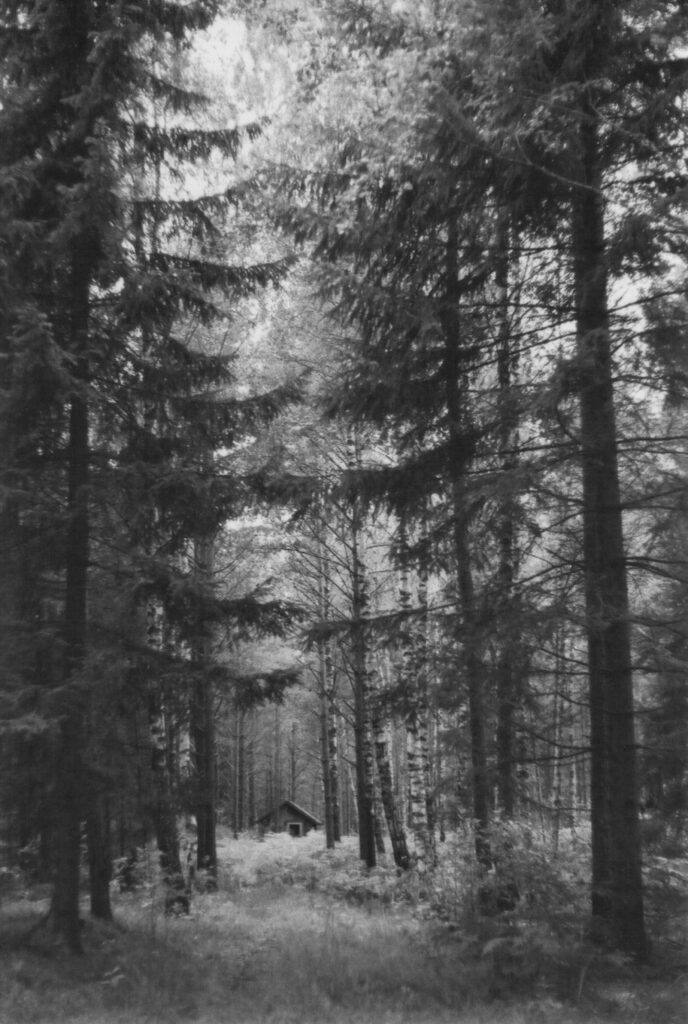
    On the other side of the estate lies the wood—the “Green.” This is the realm of Oliver Mellors, the gamekeeper who lives in isolation, protecting the local wildlife from the encroaching industrial world.

    When Connie steps into the forest, her transformation begins. Lawrence writes about the woods with breathtaking, sensory detail. It is a place of mud, rain, nesting birds, and blooming anemones. In the forest, Connie isn’t just escaping her unhappy marriage; she is escaping the suffocating cages of class and technology.

           [ Wragby Hall ]                      [ The Forest ]
       Industrialization & Logic            Nature, Body & Emotion
              (The Grey)                         (The Green)
                   \                                 /
                    \                               /
                     --> [ Connie's Awakening ] <--
    

    Mellors and Connie’s physical relationship is deeply tied to this environment. Their love is not “dirty” or mechanical; it is organic, unpredictable, and wild—just like the forest itself. By reconnecting with her own body through Mellors, Connie reconnects with the earth.

    “We’ve got to live separate from the money-mad, machine-mad crowd. We’ve got to cultivate the wild bits inside us.” — A core theme of Lawrence’s philosophy.

    Why This 1920s Novel Matters in the 2020s

    We live in an era of doom-scrolling, remote work, and AI, where most of our days are spent staring at glowing screens inside concrete boxes. We are more connected to the “grid” than ever, but completely disconnected from the soil beneath our feet.

    This is why Lady Chatterley’s Lover feels so incredibly modern today. Lawrence foresaw the mental health crisis of the 21st century. He knew that when you cut human beings off from nature, they become anxious, numb, and mechanical—just like Clifford.

    The next time you discuss Lady Chatterley’s Lover, look past the scandal. Look at the trees. Look at the contrast between the roaring coal mines and the quiet, muddy floor of the forest.

    Lawrence wasn’t just trying to shock the public with a love story; he was begging us to put down our machines, step outside, and remember what it feels like to be alive.